Showing posts with label Palladio. Show all posts

Friday, April 27, 2012

Palladio - AT


Last August I had a post "Next Up" that was a preview of my treatment of Andrea Palladio's book "I qvattro libri dell'architettvra". It was part of an exhibit loan to the UVa art museum, so as soon as the
front cover of the new limp vellum binding
 treatment was done, the book was out the door to join "Variety, Archeology and Ornament". Now that the book is back from loan, I have had the opportunity to do final "after treatment" (AT) photo doc, so you can see the results.  Photographic and written documentation is a crucial part of conservation treatment, not only for the sake of documenting the "before" and "after" condition of the book, but also for documenting my working process so that I, or another conservator, years from now will be able to follow what worked well, or what didn't work well.

I'm sharing the documentation pictures that I will archive with the rest of my treatment notes.  Perhaps they look a little stiff, with the labels and the color bar?

front opening, showing how the textblock laces into the cover
 But, documentation is a formal process, capturing and communicating details for future reference.  In creating this conservation binding I consulted articles and reference books on limp velum bindings as well as a model binding I made in graduate school. 

My documentation will also describe the materials I used to create the limp vellum binding, and the sources from which I purchased them.  Alum tawed pig skin was used for the sewing supports and goat parchment was used for the cover.  Not the sort of items you find in your average corner store!

 
new endsheet and original title page


That said, the treatment of this Palladio volume was incredibly fun.  The research that informed my decision making process allowed me to spend time with another copy of this book, and revisit a binding structure that I had enjoyed during my graduate student days.  Conservation treatment inspires exploration through close examination of a particular artifact, but then leads you to a broader examination of books and bindings from a similar time and place.


page opening toward the center

I'll post more details in the next couple of weeks, showing some of the "during" steps and some more pictures related to my background research.  For now, take a look at the picture on the right, notice the openability of the book, there are no weights holding the book open, just the weight of the pages, draping smoothly and the vellum flexing in response.  Also notice the finger smudges halfway up the margins from more than 500 years of people flipping through the pages.

Friday, December 9, 2011

Another Palladio

While I was very pleased with the results of my treatment of our Library's copy of Andrea Palladio's I quattro libri dell'architettura that doesn't mean that I'm done with Palladio.  I may never treat another copy of this work or another Palladio book, but I can certainly keep learning about 16th century printing and bindings and the best way to do that is to look at other copies.

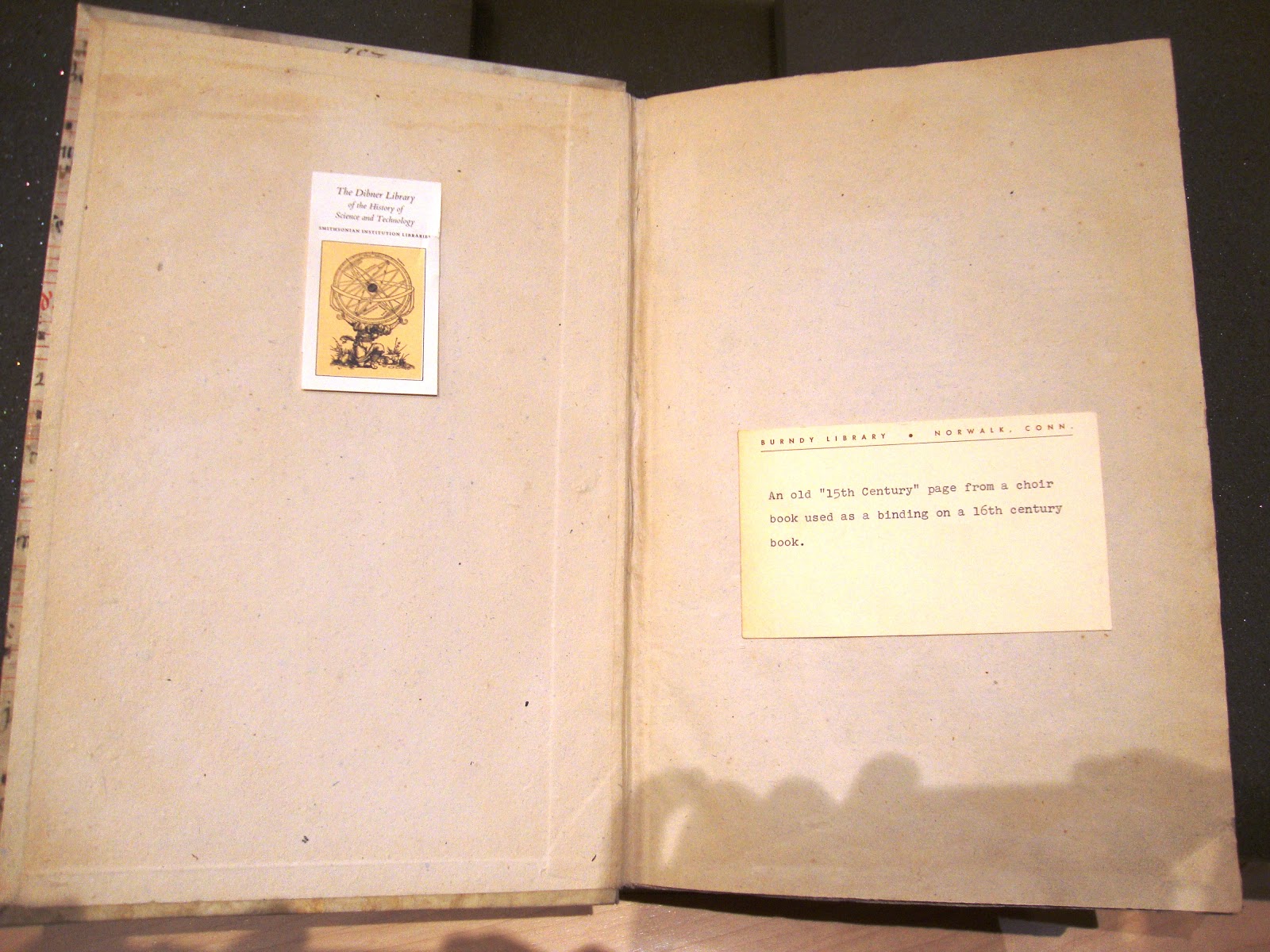
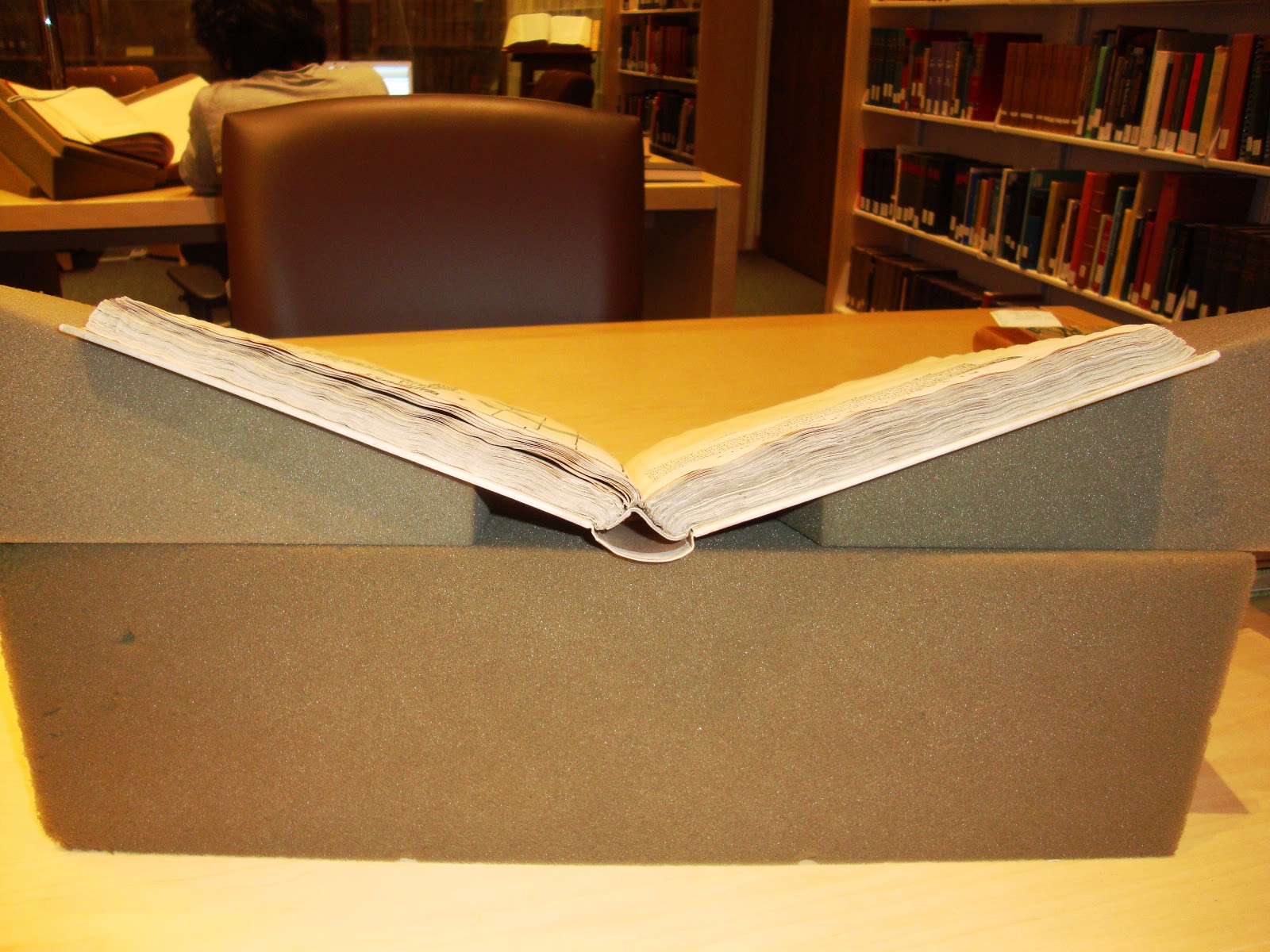
This is the Dibner Library's copy of I "quattro". Like the UVa copy the original binding has been lost to time and while the "re-binder" did do another vellum binding, they chose to use a 20th century case binding instead of something more contemporary with the text.


See the note from the Burndy Library, confirming my first impression.


I love this colophon and the marginalia on the facing page.


And what do I mean by case binding?  See in the  picture below how the spine of the book pops away from the spine of the cover.  Back in "the good old days" books were sewn on leather thongs or heavy cords which were laced into wooden boards or a piece of vellum. In the late 19th century book production became more of an industrial process and the process of sewing and making the cover became two separate steps.  The parts were joined by gluing the first and last pages (and maybe some linings) to the insides of the covers, much less sturdy, but much faster.  I'm not sure why the binder chose a case binding for this book, but the work is neatly done and since book has been in a rare book library since the early 20th century, careful handling has kept the binding intact.

I'll post some pictures of my Palladio when it comes back from exhibit.  Stay tuned!

Monday, August 1, 2011

Next Up

My next treatment is Palladio's "I quattro libri dell'architettura di Andrea Palladio" which was published in Venice in 1581.  Quite a bit has happened to this book since it first came off the press.  It has had at least four owners judging by the bookplates and inscription on the front paste down and fly leaf.  It has been re-bound at least twice judging from the number of different endpapers attached to the text block; and it has been heavily used for reference given the "thumb stains" on the fore edge margins. There are scribbles of sums on a few of the pages and a few doodles as well.
the four books, dis-bound with their boards
There were several attempts to re-attach the boards with various kinds of tape (all failed).  That said, it is a pretty straight forward treatment.  The binding was in horrible shape, the sewing was broken in several places, the front board was completely detached and many of the pages were broken at the gutter margin.   
So, nothing to do but finish taking the book apart so that it can be cleaned, mended and re-bound.  Once the treatment plan was approved by the Head of Special Collections, I went ahead with the dis-binding, carefully noting where the page numbers had been mis-printed and whether any signature marks or catch words had also been mis-printed. 

Next, dry cleaning to pick up as much loose dirt as possible, and then into the water!  I washed each book separately since there were too many pages to do in one session.  Most of the books needed multiple baths
first bath on the left, second bath on the right


before the paper stopped releasing dirt into the water.  The first bath for this book was at pH 5.5 after a half hour soak which is somewhat acidic, but after three baths the water stayed clear, and then the pages went into a final alkaline bath to impart a little bit of an alkaline reserve in the paper.  It still amazes me how the water changes color so dramatically, and the paper actually looks cleaner and brighter once it dries. 

This book needs to be on exhibit at the end of the month, so stay tuned for more conservation treatment action!!